One kitchen, two sets of rules
Some houses are vegan. Some are vegetarian. A lot are both, depending on who is home. The useful thing is one plan that does not make a separate dinner for each person unless you truly have to.
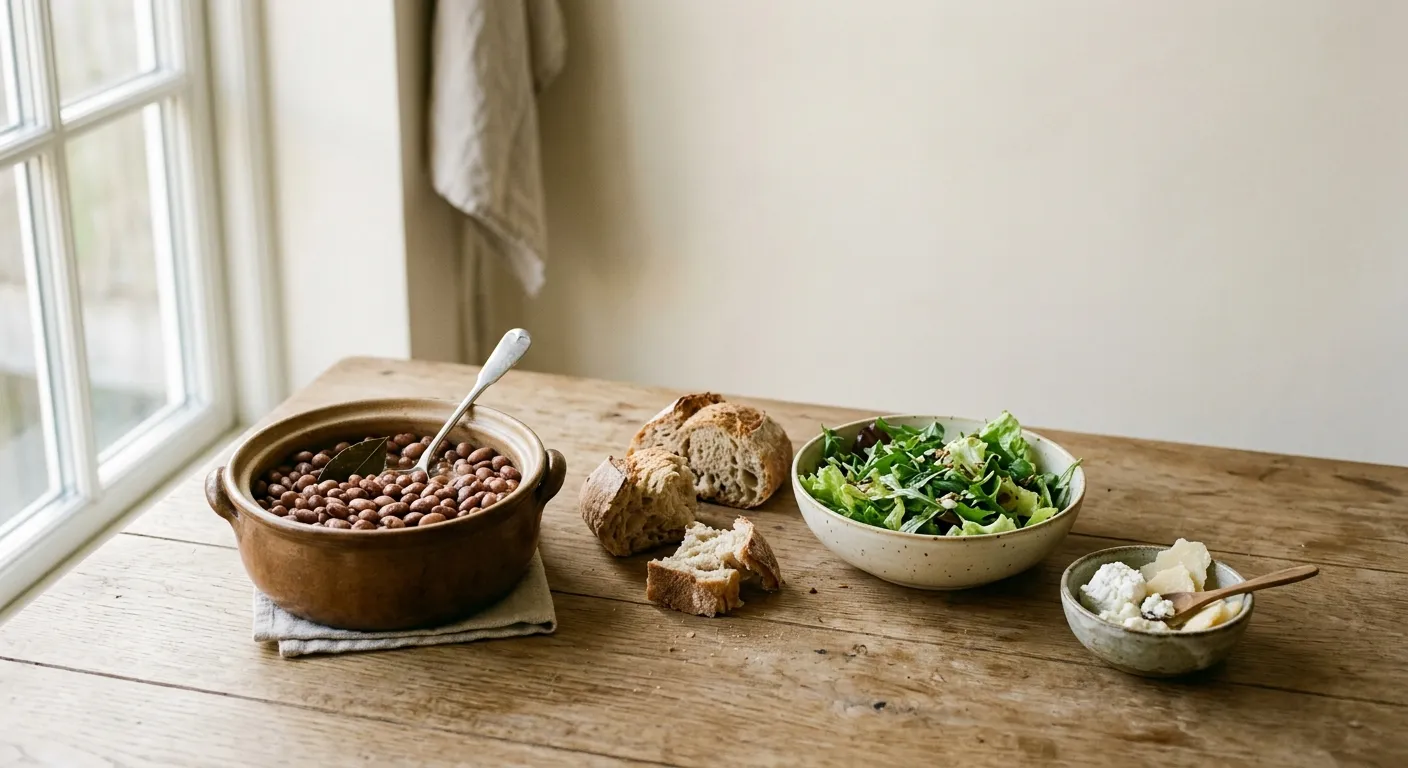
Cook the base, add the argument on the side
If one person eats cheese and eggs and another does not, you do not need two recipes. You need a bean stew, a tray of vegetables, a pot of rice, and a small dish of cheese or a fried egg for the person who wants it. The vegan plate is the dinner. The extras are optional, not structural.
Menuistia can generate the vegetarian or vegan version as the main recipe. Say in the note who gets the egg. Do not let the generator hide parmesan in the sauce and call it adaptable.
Vegetarian is not automatically easier
Eggs and cheese cover a lot of lazy dinners, which is why a vegetarian week can quietly become omelette, pasta, omelette. That is fine twice. By Thursday everyone is bored and you order something with meat out of spite.
Ask for variety in the protein: lentils one night, chickpeas, tofu, a cheese dish if the house eats dairy, eggs once. Same shop, different pots.
Meatless guests
When someone is coming for dinner and you are not sure how strict they are, cook vegan and put dairy on the table. It is harder to remove cheese from a sauce than to offer it in a bowl. A short menu plan for the nights they are there saves the "what do they eat again" conversation at 6pm.
Related guides
Get cooking!